
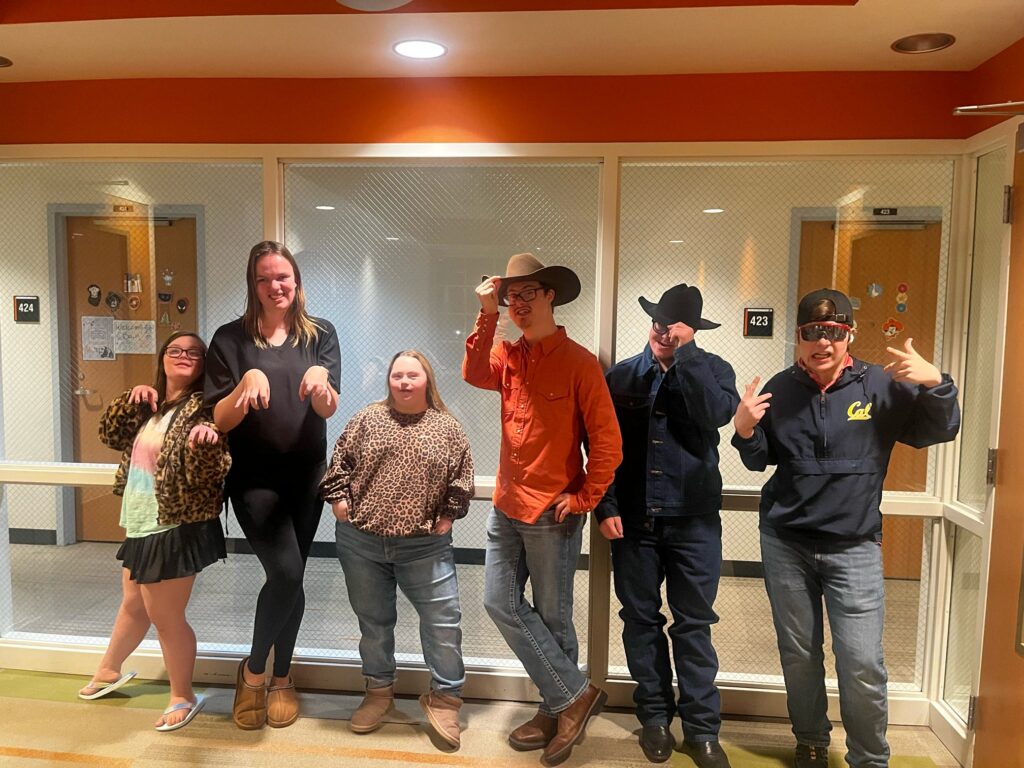
Hi there! My name is Dr. Emily Tucker, and I am the program director of Opportunity Orange Scholars. I was brought into this position the summer before our inaugural cohort arrived on campus for the Fall 2022 semester. I often tell people this is the only job I applied for straight out of grad school because it’s the only job I wanted. I can’t imagine doing anything else—I love my job.
My colleagues have written blogs about the importance of high expectations in IPSE and the value these programs bring to students, families, and the universities that house them. And these outcomes matter—they are important, and it’s crucial that we talk about them! But I also think it’s important to highlight some of the less tangible benefits of IPSE programs—the magic that often happens in postsecondary education that, as researchers and educators, we don’t always know how to measure, report, or even talk about.
To say that I value education is an understatement. I came to Oklahoma State University (OSU) as a freshman in Fall 2012 with the goal of studying to become a therapist—much to my parents’ chagrin. In Fall 2013, I took a required class called Developmental Disabilities: Issues Across the Lifespan that genuinely changed my life.
Throughout the semester we learned about the history of folks with intellectual disability, including institutions and the deinstitutionalization movement. We studied employment rates and how Section 14(c) waivers mean folks with intellectual disability don’t always get paid minimum wage, even when working jobs in their communities. We learned about healthcare and how healthcare providers continue to report a lack of training and resources when it comes to working with patients with intellectual disability. And perhaps for the first time as a privileged small-town kid from Oklahoma, I realized just how profound my passion for social justice is.
If you ask most college students why they came to college, they’ll likely say some version of “to get a job!” And that’s good—earning a degree or any university-recognized credential should be a valuable path to employment. But to me, college—and education in general—has the opportunity to be about so much more than just getting a job.
Education is a chance to learn who you are, what you want out of life, and what supports you need to get there. Gaining the knowledge and skills for employment should be, in my opinion, the minimum that postsecondary education can offer. Figuring out who you are, who you want to be, and what you need to get there—that is the true magic of postsecondary education.
Creating inclusive postsecondary education programs ensures that students with and without intellectual disability have the opportunity to wrestle with these big questions alongside each other—to support one another and to shape each other’s answers in meaningful ways.
I love my job for so many reasons, but witnessing the everyday magic of young adults coming together to wrestle with some of life’s biggest questions is undoubtedly my favorite part. Ensuring that people with intellectual disability have equitable opportunities to explore these questions alongside their peers without intellectual disability changes lives—and it continues to change mine every day.
Go Pokes!
Emily C. Tucker, Ph.D
Director | Opportunity Orange Scholars
Oklahoma State University